


Global Inflation Forecast to Reach 4.7% in 2026 as Economic Risks Increase, IMF Says
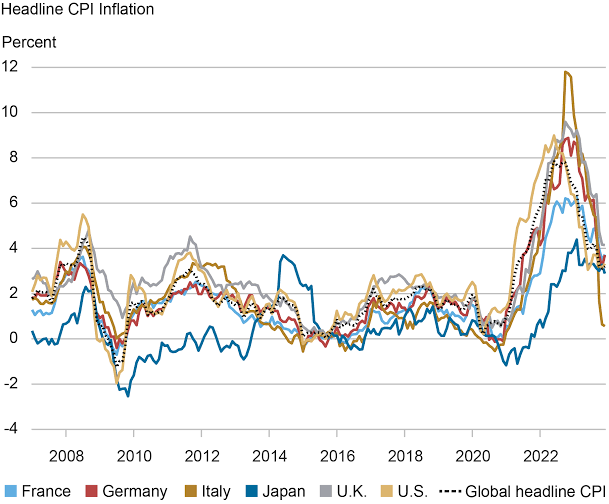
Global inflation is projected to rise to 4.7% in 2026, highlighting continued price pressures across the world economy amid geopolitical tensions, economic uncertainty and persistent challenges facing central banks.
According to the International Monetary Fund’s (IMF) October 2026 World Economic Outlook, global headline inflation is expected to increase to 4.7% this year before easing to 4.1% in 2027.
The latest projections underline the challenges facing policymakers as governments and central banks attempt to contain inflation while supporting economic growth and maintaining financial stability.
IMF Highlights Persistent Global Inflation Risks
The IMF’s report, titled Resilience Under Strain, Urgent Choices, identifies several downside risks to the global economic outlook, including escalating geopolitical conflicts, renewed trade tensions and financial vulnerabilities.
The report also highlights the potential impact of changes in artificial intelligence investment expectations on global economic activity.
Economies that rely heavily on imported energy and have limited exposure to the technology investment boom are expected to face particularly challenging conditions.
Global Economic Growth Faces Additional Pressure
Alongside its inflation forecasts, the IMF projects global economic growth of 3.1% in 2026, followed by a recovery to 3.4% in 2027.
The outlook reflects an increasingly complex international economic environment, with geopolitical developments and trade uncertainty creating additional challenges for businesses, investors and governments.
Rising inflation could also complicate monetary policy decisions, as central banks seek to balance the need to control prices against the risks of slowing economic activity.
Inflation Outlook Remains a Key Concern for Financial Markets
The expected increase in global inflation is likely to remain an important factor influencing financial markets, interest rate expectations and investment decisions.
Higher inflation could encourage central banks to maintain tighter monetary policies for longer, potentially affecting borrowing costs, exchange rates, commodity prices and international capital flows.
The IMF’s projections highlight the importance of monitoring inflation trends and economic developments as policymakers navigate the challenges facing the global economy in 2026 and 2027.